
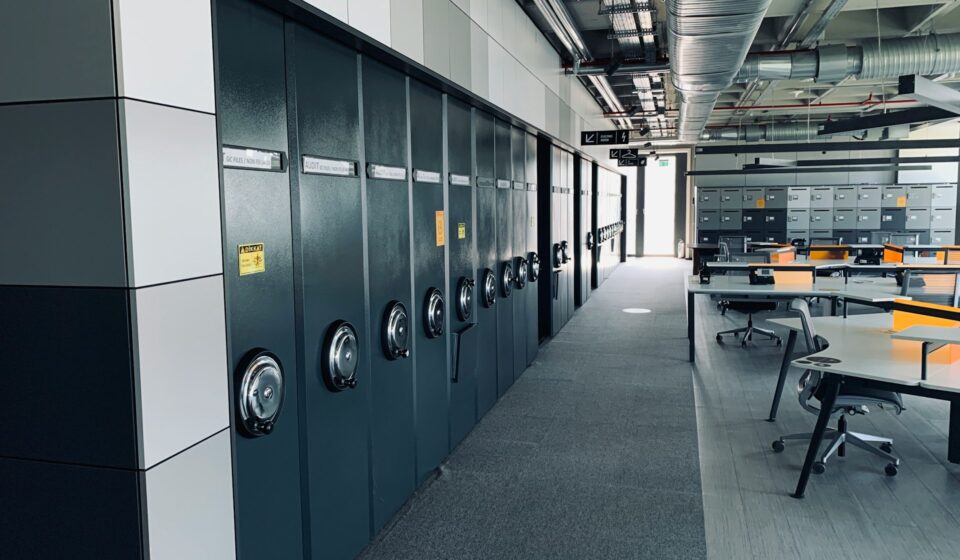

Managing personal belongings, critical assets, and incoming deliveries can create significant bottlenecks for facility managers.
Table Of Content
- The Mechanics of Intelligent Hardware
- Advancements in Locking Technology
- Flexible Authentication Methods
- Cloud Control and Software Integration
- Centralized Administrative Oversight
- Connecting with Enterprise Tools
- Applications for Corporate and Shared Workspaces
- Streamlining the Modern Office
- Maximizing Floor Space
- Enhancing Logistics and Asset Management
- Tracking High-Value Equipment
- Simplifying Parcel Delivery
- Improving the Guest Experience in Public Venues
- Self-Service Luggage and Coat Storage
- Driving Consistent Revenue
- Specialized Configurations for Healthcare and Education
- Safeguarding Prescriptions and Medical Supplies
- Modernizing Campus Facilities
- Next Steps for Modernizing Your Facility
Outdated storage methods routinely lead to lost keys, forgotten combinations, and wasted administrative time. These manual processes also introduce security vulnerabilities that can compromise expensive equipment or sensitive data.
Modern organizations are resolving these daily operational headaches by adopting intelligent technology. By integrating durable hardware with cloud-based software, businesses can fully automate their storage infrastructure.
This shift eliminates the need for physical keys and gives administrators complete visibility into how space is being utilized in real time. This guide explores the functionality of advanced storage systems, detailing their core mechanisms and primary benefits.
You will discover specific ways these systems support various industries, from corporate offices to healthcare facilities. Implementing the right technology reduces operational friction, reclaims valuable floor space, and provides every user with a highly intuitive experience.
The Mechanics of Intelligent Hardware
Advancements in Locking Technology
The foundation of modern storage relies on highly responsive, electronic locking mechanisms. Unlike traditional padlocks or key-operated cylinders, electronic locks connect directly to a localized controller or a broader network.
Facilities can choose between hardwired locks that draw power from the building’s electrical grid and battery-powered locks that operate via Bluetooth Low Energy. Both hardware styles are built with fail-safes, ensuring that compartments remain operational or securely accessible even during unexpected power outages.
Flexible Authentication Methods
A primary advantage of upgrading your infrastructure is the elimination of physical keys. Users gain access to their assigned compartments through a variety of digital credentials. Providing multiple authentication routes ensures that the system adapts to the existing habits of your workforce or visitors.
Administrators can configure their physical banks to accept the following credentials:
- Radio Frequency Identification (RFID) cards and employee badges.
- Mobile applications function via Bluetooth connectivity.
- Digital wallets, including Apple Wallet and Google Wallet.
- System-generated QR codes and numeric PINs.
- Biometric scans, such as fingerprint recognition.
Cloud Control and Software Integration
Centralized Administrative Oversight
The true intelligence of these setups lives in the software layer. An effective locker management platform allows facility managers to monitor and configure their entire network from a single remote dashboard. Administrators can instantly assign compartments, revoke access rights, and view historical usage logs.
This level of oversight makes it exceptionally easy to track down missing items or investigate security incidents. The centralized dashboard also provides data on occupancy rates, helping leadership understand exactly how much capacity is being used on any given day.
Connecting with Enterprise Tools
Standalone systems create data silos and force employees to memorize new login credentials. To maximize efficiency, digital lockers integrate directly into the software ecosystem your organization already uses.
Cloud-based controllers utilize open APIs to connect with existing enterprise directories and facility applications.
Common software integrations include:
- Active Directory and Single Sign-On (SSO) providers for synchronized user management.
- Workplace experience applications that handle desk bookings and meeting room reservations.
- Security platforms govern overall building access.
- Payment gateways that process transactions for temporary public rentals.
Applications for Corporate and Shared Workspaces
Streamlining the Modern Office
The shift toward hybrid work schedules has fundamentally changed how offices operate. Because employees no longer sit at the same desk every day, they require flexible, on-demand areas to store their personal items.
Smart storage banks provide staff with a seamless start to their workday. Employees simply scan their existing ID badge to claim an available compartment, securing their laptop bag or coat before heading to a hot desk.
Maximizing Floor Space
Corporate real estate is expensive, and dedicating massive square footage to permanently assigned metal cabinets is highly inefficient. Digital systems allow organizations to implement first-come, first-served policies.
Because compartments rotate between users throughout the week, businesses need significantly fewer total units to support their workforce. This consolidation frees up valuable floor space that can be repurposed into collaborative meeting zones or additional workstations.
Enhancing Logistics and Asset Management
Tracking High-Value Equipment
Industrial facilities, police departments, and emergency response teams rely on expensive, specialized tools. Losing track of these assets halts productivity and drains departmental budgets.
Implementing secure storage banks equipped with digital tracking eliminates ambiguity regarding tool management. When an employee requires a specific scanner, radio, or medical device, they must authenticate themselves to open the designated door.
The software generates a permanent audit trail detailing exactly who checked out the equipment and when it was returned. Some advanced configurations even incorporate internal weight scales, instantly notifying management if an asset is missing or returned with missing components.
Simplifying Parcel Delivery
Corporate mailrooms and residential lobbies frequently struggle to manage the daily influx of packages. Automated drop-off banks provide a highly organized solution for incoming logistics. Couriers place packages into specific compartments, which triggers an automated email or text message to the recipient.
The recipient can then collect their package at their own convenience using a unique, one-time access code. This automated workflow prevents package theft and allows reception staff to focus on guest services rather than sorting boxes.
Improving the Guest Experience in Public Venues
Self-Service Luggage and Coat Storage
Transit hubs, museums, and sports stadiums handle massive crowds. Forcing visitors to stand in long lines to drop off a coat or a suitcase degrades the guest experience before an event even begins.
Automated public rental walls allow visitors to secure their belongings in seconds. Guests use a central touch terminal to select a compartment size, process their digital payment, and receive their access credential.
Driving Consistent Revenue
For venue operators, self-service infrastructure represents a highly lucrative, hands-off revenue stream. Facilities can implement dynamic pricing models that adjust rates based on the duration of use, the size of the compartment, or the specific event taking place.
Because the digital interface requires no ongoing staff supervision, the operational overhead remains incredibly low, allowing properties to achieve a rapid return on their initial hardware investment.
Specialized Configurations for Healthcare and Education
Safeguarding Prescriptions and Medical Supplies
Pharmacies face immense pressure to dispense medications accurately while keeping wait times low. Implementing automated Click & Collect banks offers patients a highly convenient, 24/7 retrieval option.
Pharmacists securely load filled prescriptions into designated units, and patients retrieve their medications using a secure code sent to their mobile device. This workflow improves patient privacy, eliminates front-counter congestion during peak hours, and allows staff to dedicate more time to consulting with patients who require detailed medical advice.
Modernizing Campus Facilities
Educational institutions require robust infrastructure to support thousands of active students and faculty members. Traditional combination dials result in endless administrative support tickets and frequent maintenance requests.
Digital systems modernize the campus environment by allowing students to operate their assigned units using their student ID cards. Furthermore, university IT departments can utilize these intelligent banks to safely distribute loaner laptops, tablets, and audio-visual equipment across massive, decentralized campuses.
Next Steps for Modernizing Your Facility
Transitioning away from mechanical keys and padlocks yields immediate operational dividends. Intelligent storage ecosystems lower administrative overhead, enforce stringent security protocols, and provide actionable data regarding facility usage.
Organizations that proactively adopt these automated systems create a frictionless environment that respects the time of employees, guests, and administrative staff alike. Evaluating your specific spatial requirements and daily workflows is the first step toward implementing an effective hardware solution.
For a comprehensive overview of how customizable contactless locker solutions can be tailored directly to your industry needs, explore the detailed resources available at https://keynius.eu/.